Back to Journal
The Hidden Process Behind Content Creation at Scale
Reading Time
5 Min

Before a finished campaign appears on your screen a polished video, a high-impact ad, or a simple social post from Nike the real work has already been done. What most people see is the final output, but what actually determines the success of that content happens much earlier, long before editing begins or design files are opened. This is the part most companies never fully understand, and it’s the reason their content often feels rushed, delayed, or inconsistent.
At a glance, content creation seems straightforward. An idea forms, a team executes, and something gets published. But inside a global brand like Nike, that moment before execution triggers a much deeper system. It’s not a single step—it’s a coordinated process involving planning, alignment, structure, and capacity. And without that foundation, even the best ideas struggle to translate into consistent output.
The Work Begins Before Production
Every campaign starts with intent, not execution. Before anything is created, there is a deliberate effort to define what the content is meant to achieve. The objective is clarified, the audience is identified, and the message is refined until there is no ambiguity about what success looks like. This stage is often underestimated because it doesn’t produce visible output, but it directly impacts everything that follows. When teams skip this level of clarity, they usually pay for it later through revisions, delays, and misalignment.
Nike treats this phase as alignment, not documentation. It’s not just about writing a brief—it’s about ensuring that everyone involved understands the direction before any work begins. That shared understanding removes friction later, allowing execution to move faster without constant correction.
Alignment Before Action
Once the direction is clear, the next phase is not production—it’s alignment. Different teams come together to interpret the brief, clarify expectations, and surface potential issues before they become problems. Creative, marketing, and production stakeholders are not working in isolation; they are aligned early so that execution doesn’t depend on reactive communication.
This is where many growing companies fall behind. Instead of aligning upfront, they rely on ongoing back-and-forth during production. Feedback arrives late, expectations shift mid-process, and timelines stretch as teams try to correct issues that could have been avoided entirely. Nike compresses its timelines by addressing these variables early, which allows everything that follows to move with far less resistance.
Execution Happens in Parallel, Not in Sequence
When production finally begins, it doesn’t unfold in a linear way. Instead of one person completing one task at a time, multiple teams work simultaneously across different aspects of the campaign. Video production, design, motion graphics, and content adaptation are all happening in parallel, creating momentum rather than dependency.
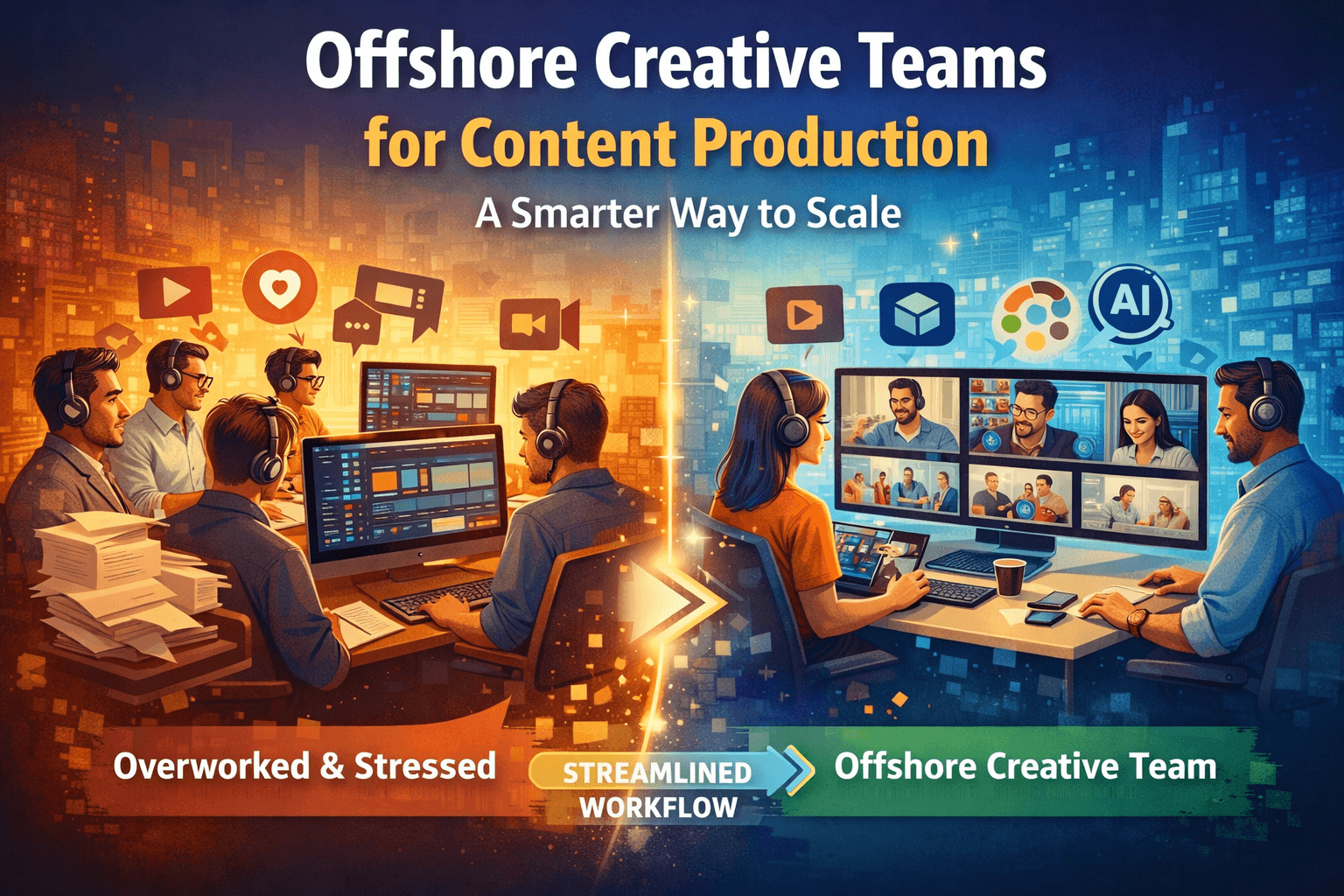
This is one of the biggest differences between high-performing brands and growing teams. Most companies rely on a sequential workflow where progress depends on one person finishing before another can start. That structure creates bottlenecks by design. Nike avoids this by building capacity into the system, allowing multiple outputs to move forward at the same time. The result is not just faster delivery, but the ability to produce at a much higher volume without sacrificing consistency.
Feedback Is Built Into the Process
As production moves forward, feedback doesn’t wait until the end. Instead, it’s integrated throughout the process in a way that allows adjustments to happen early, when they are easier and less costly to implement. This continuous feedback loop ensures that teams stay aligned with the original direction while still having room to refine and improve.
In contrast, many teams push feedback to the final stages, which often leads to last-minute changes and unnecessary rework. By the time issues are identified, timelines are tight and options are limited. Nike avoids this by treating feedback as an ongoing process rather than a final checkpoint, which keeps production moving smoothly without major disruptions.
Quality Is Managed by System, Not Luck
As content scales, maintaining quality becomes more challenging. Relying on individual talent alone is not enough when volume increases. Nike addresses this by embedding quality control into its process. There are defined standards, structured reviews, and clear expectations that guide every piece of content before it is published.
This approach creates consistency, but more importantly, it creates improvement over time. Each correction informs future work, ensuring that mistakes are not repeated. Instead of reacting to problems, the system evolves to prevent them. This is how quality can increase even as output grows, which is something most teams struggle to achieve.
Distribution Is Planned Before Completion
Another key difference lies in how content is prepared for distribution. Rather than treating distribution as a final step, Nike plans for it during production. Content is created with specific channels, formats, and variations in mind from the beginning. This allows the final output to move seamlessly into its intended platforms without last-minute adjustments or compromises.
Without this level of planning, teams often find themselves rushing to adapt content at the end, which leads to inefficiencies and missed opportunities. By integrating distribution into the production process, Nike ensures that every piece of content is ready to perform the moment it goes live.
Why It Looks Effortless from the Outside
When a campaign finally launches, it appears fast and effortless. But that speed is not the result of quick execution—it’s the result of everything that happened beforehand. The clarity, alignment, structure, and systems put in place early are what make the final stage feel smooth.
This is where the gap becomes clear. Most companies are not failing because they lack creativity or effort. They are struggling because they are trying to produce high-level output without the underlying system that supports it. The pressure shows up as missed deadlines, inconsistent quality, and teams that are constantly playing catch-up.
The Real Bottleneck
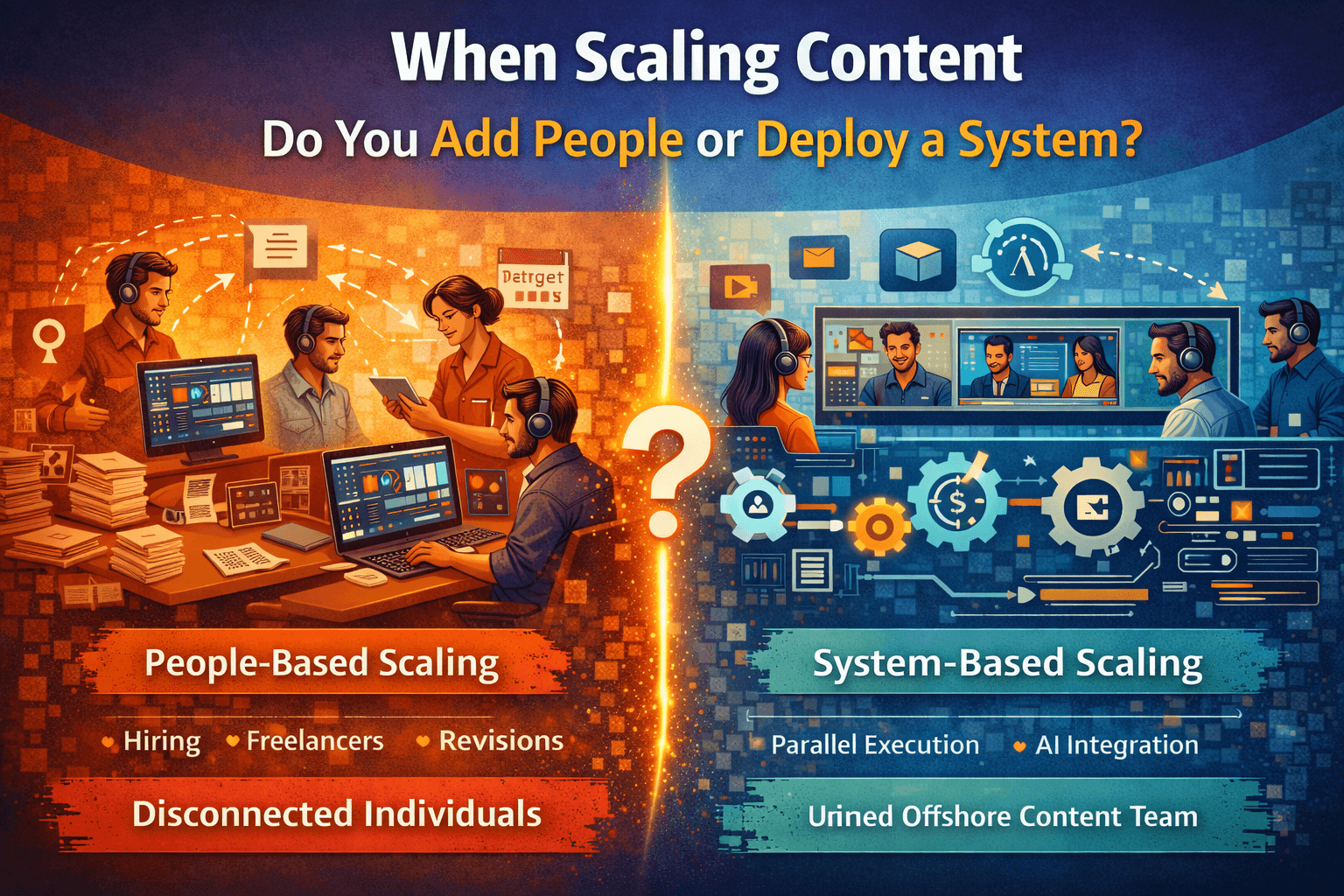
At first glance, it’s easy to assume the problem is talent. Many teams believe they need to hire more people or find better individuals to solve their content challenges. But in reality, the issue is often capacity. Trying to replicate a multi-team system with one or two people creates a bottleneck that no amount of effort can overcome.
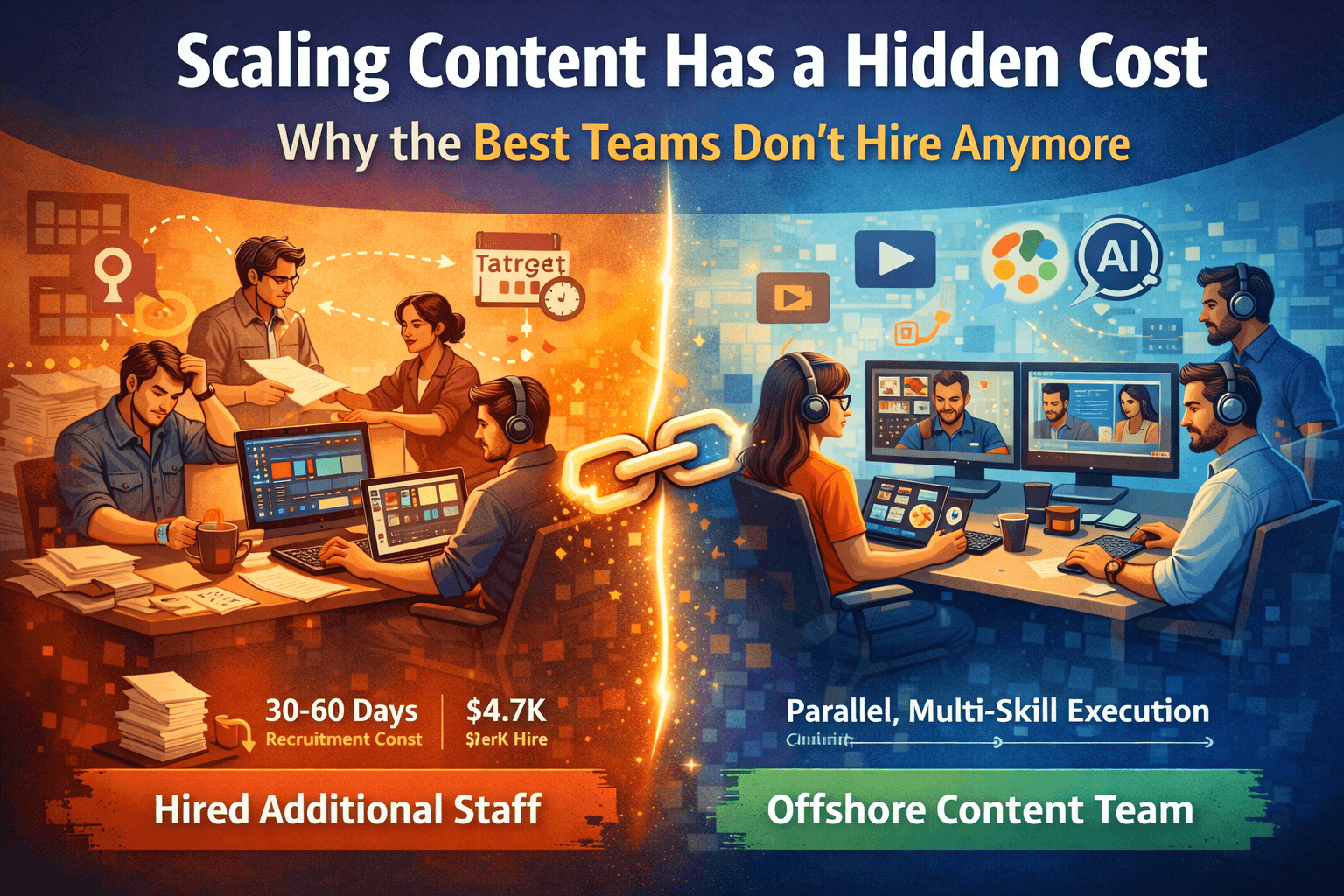
Even hiring comes with limitations. A single mid-level video editor in the United States can cost between $77,000 and $94,000 in base salary, and roughly $96,000 to $132,000 when fully loaded with overhead, according to BLS and Glassdoor estimates. That investment still results in one person handling one part of the process, which doesn’t address the structural limitations that slow everything down.
A Shift in Perspective
The real shift is not about producing better content—it’s about building a system that allows content to scale. Once that system is in place, output becomes more consistent, timelines become more predictable, and teams can focus on strategy rather than constantly managing production challenges.
This is what separates companies that grow steadily from those that stall under pressure. The ability to execute consistently is not just about skill—it’s about structure, capacity, and the way work is organized before it even begins.
Before a single piece of content goes live, the outcome has already been shaped by everything that happened upstream. The planning, the alignment, the systems, and the capacity all determine whether execution will feel smooth or chaotic.
For companies looking to scale, this is the part that matters most. Because when the foundation is built correctly, everything that follows becomes easier, faster, and far more effective.