



Back to Journal
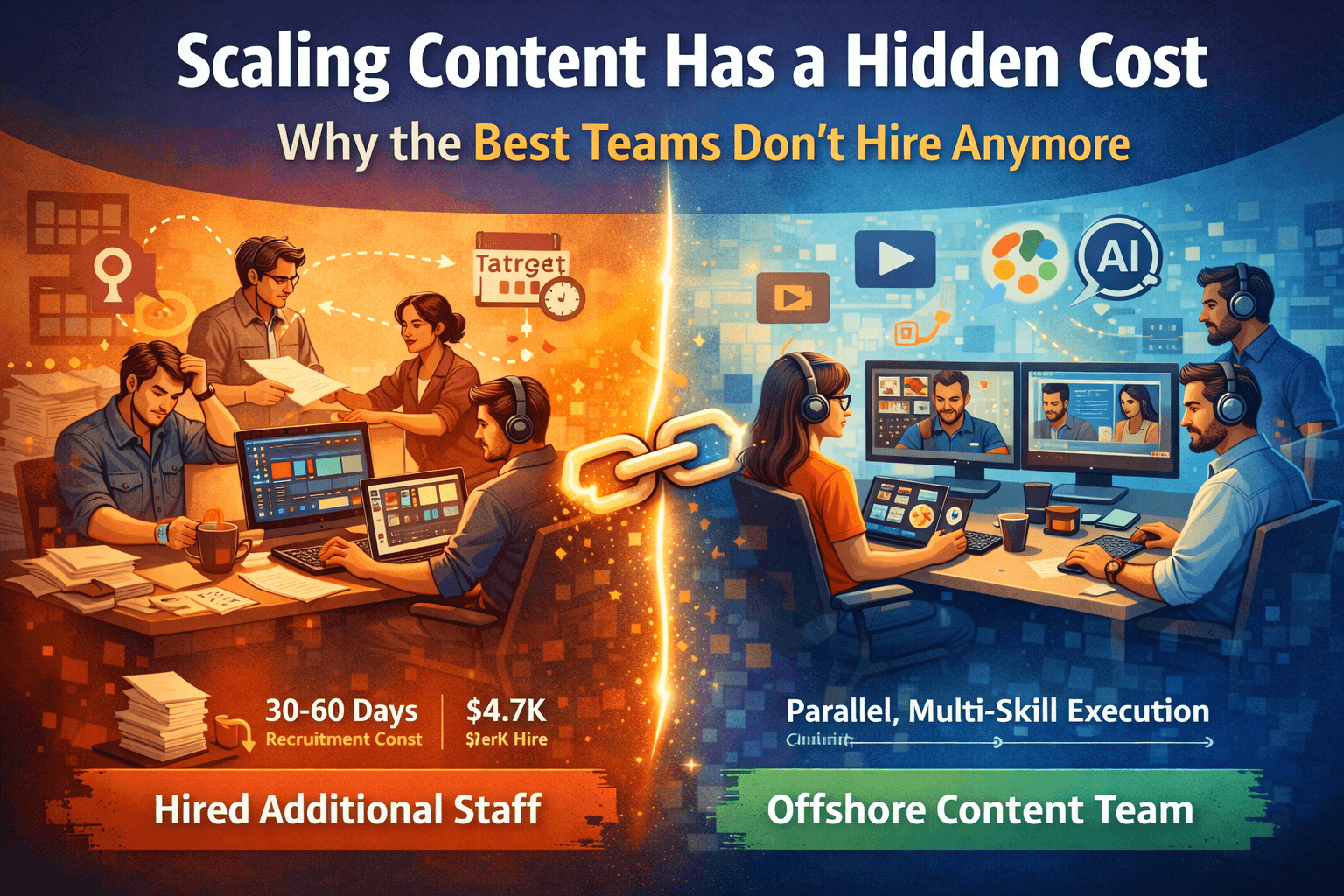
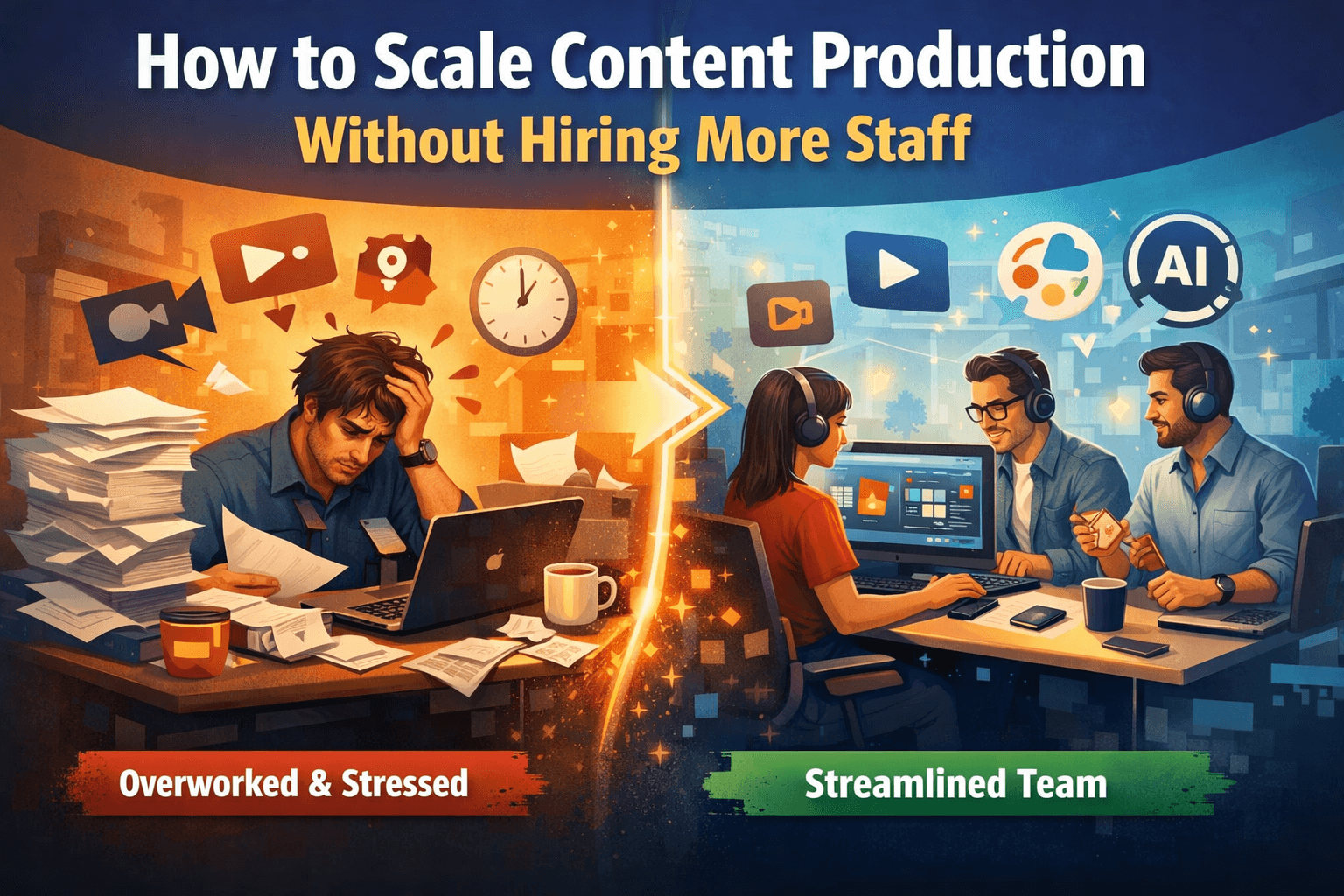
Why Hiring Won’t Scale Your Content (And What to Do Instead)
Reading Time
2 Mins
The Assumption That Slows Everything Down
When content demand increases, most companies respond the same way:
They hire.
A designer.
A video editor.
A content manager.
On the surface, it makes sense.
More work → more people → more output.
But that logic breaks faster than most expect.
The Hidden Trade-Off of Hiring
Hiring doesn’t just add capacity.
It adds:
Communication layers
Approval cycles
Dependency chains
Each new person doesn’t just produce work—they require coordination.
And coordination is where speed dies.
So while your team grows, something else grows faster:
Operational drag.
You’re Not Scaling Output. You’re Scaling Complexity.
Here’s what it looks like in reality:
Projects move between people
Context gets lost in handoffs
Revisions increase
Timelines stretch
At some point, adding more people stops increasing output.
It just makes the system harder to manage.
The Real Problem: You’re Scaling People, Not Systems
This is the shift most companies miss.
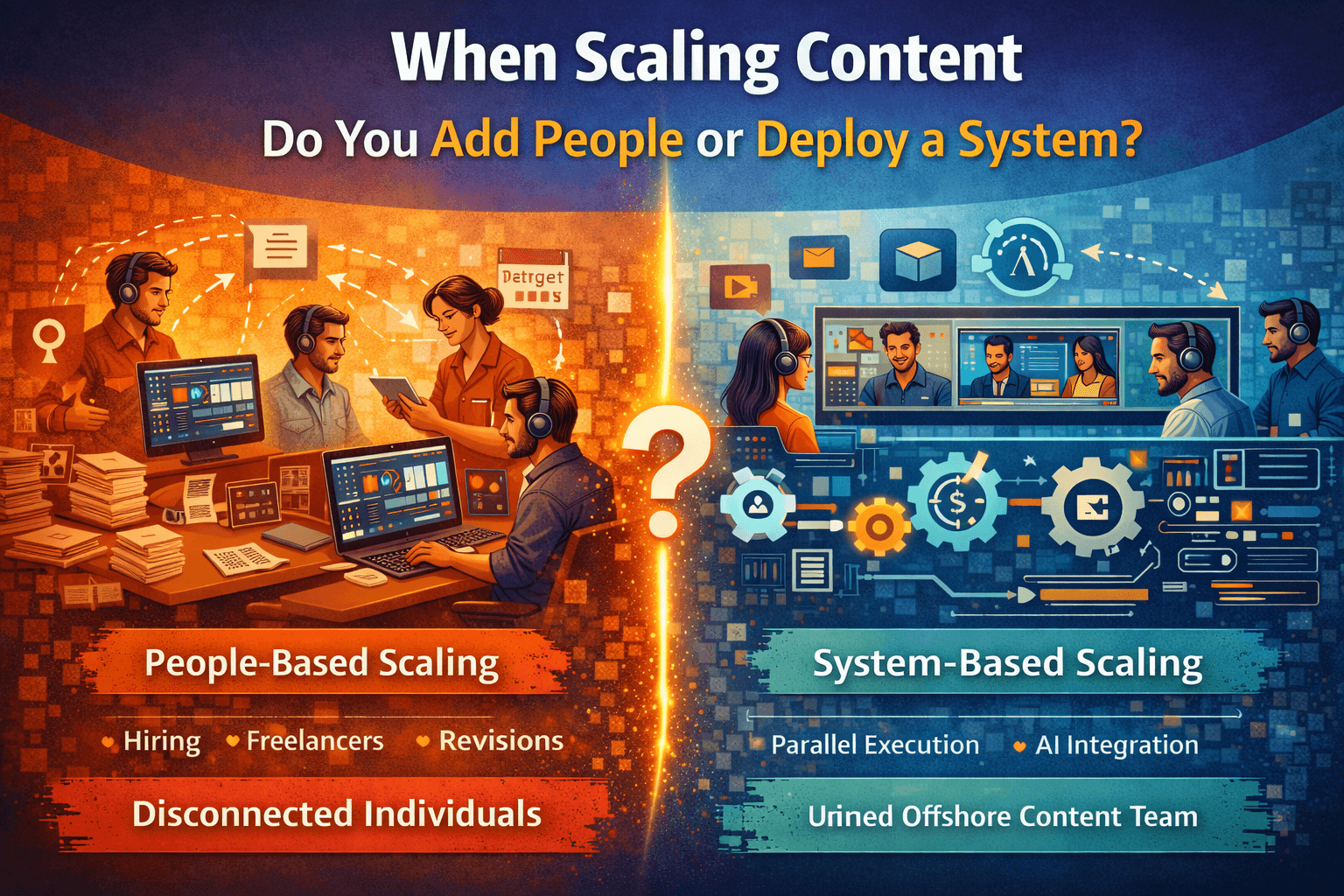
There are two fundamentally different ways to grow content production:
1. People-Based Scaling
You add individuals to solve problems.
Need more videos? Hire an editor
Need better visuals? Hire a designer
Need more content? Hire a marketer
Each hire solves one piece.
But creates new dependencies between pieces.
2. System-Based Scaling
You build—or deploy—a structure that handles execution.
Instead of adding roles, you introduce:
A coordinated team
Defined workflows
Parallel execution
Why Systems Outperform People at Scale
Parallel Execution Beats Sequential Work
In people-based models:
One person finishes → passes it on
In systems:
Multiple functions operate at the same time
Result:
Faster turnaround without increasing pressure.
Systems Reduce Decision Fatigue
More people = more decisions:
Who does what
Who reviews
Who owns the outcome
A system removes that ambiguity.
Roles are clear. Flow is defined. Output is predictable.
Systems Improve Over Time
Individuals perform tasks.
Systems evolve.
With repetition:
Processes get tighter
Errors decrease
Output becomes consistent
This is where scale actually happens.
Why Most “Outsourcing” Doesn’t Solve This
Many companies try outsourcing—but still think in roles.
They hire:
A freelancer here
A contractor there
That’s still people-based scaling.
The structure hasn’t changed.
So the same problems remain:
Coordination
Inconsistency
Rework
What System-Based Scaling Looks Like in Practice
Companies working with models like TeamBoost365 approach this differently.
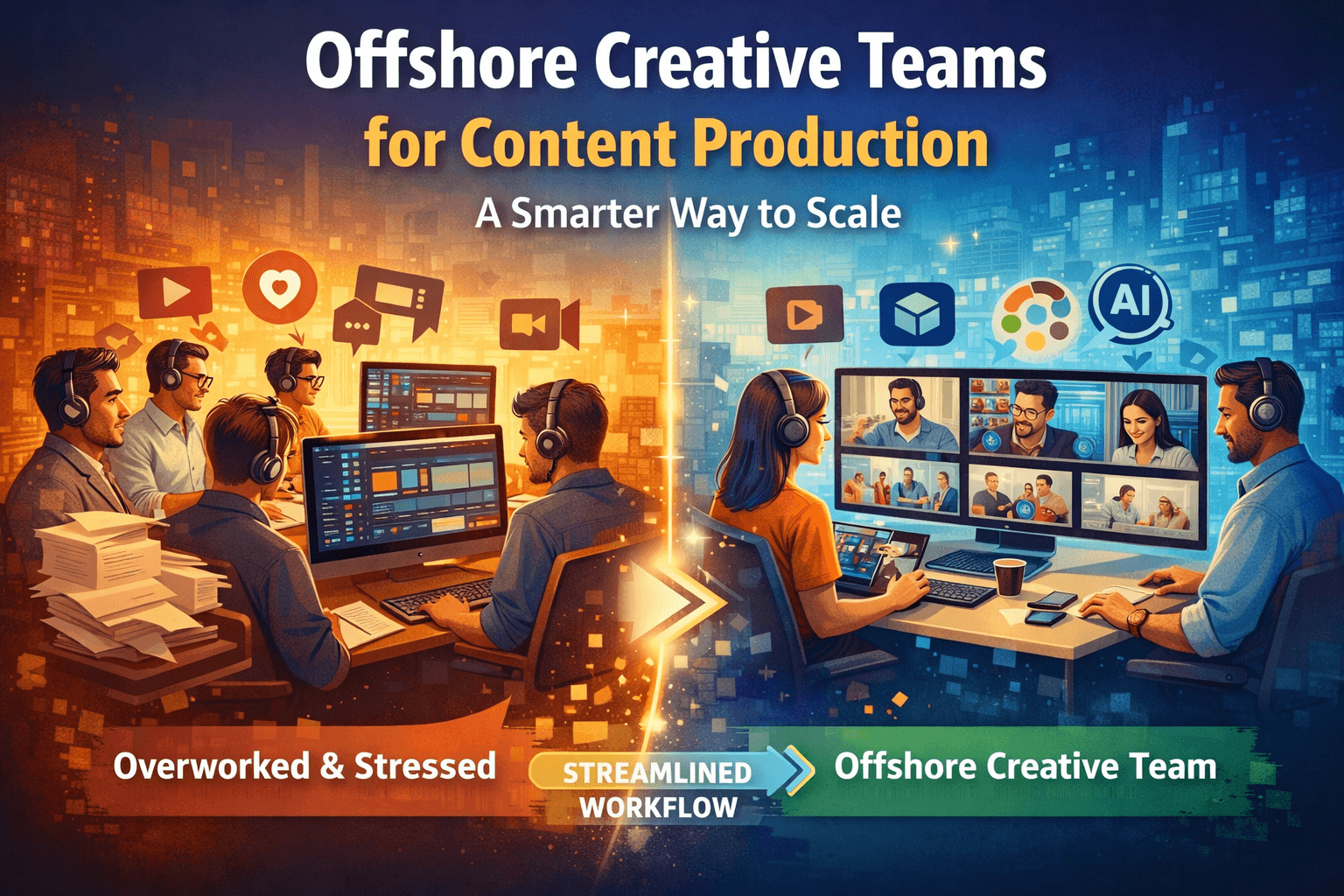
Instead of plugging gaps with individuals, they deploy fully managed creative teams designed to function as a single unit.
That means:
Multiple skill sets working together
Real-time collaboration
Shared accountability for output
The difference is immediate:
You’re no longer managing people.
You’re operating a system.
The Outcome: Capacity Without Chaos
When you shift from people to systems:
Output increases
Timelines shrink
Quality stabilizes
Internal teams stop firefighting
Most importantly:
Growth stops feeling heavy.
Instead of asking:
“Who should we hire next?”
Ask:
“What system would make this problem disappear?”
Because once the system is right, scaling becomes a byproduct—not a struggle.
Hiring feels like progress.
But in many cases, it’s just adding weight to a broken structure.
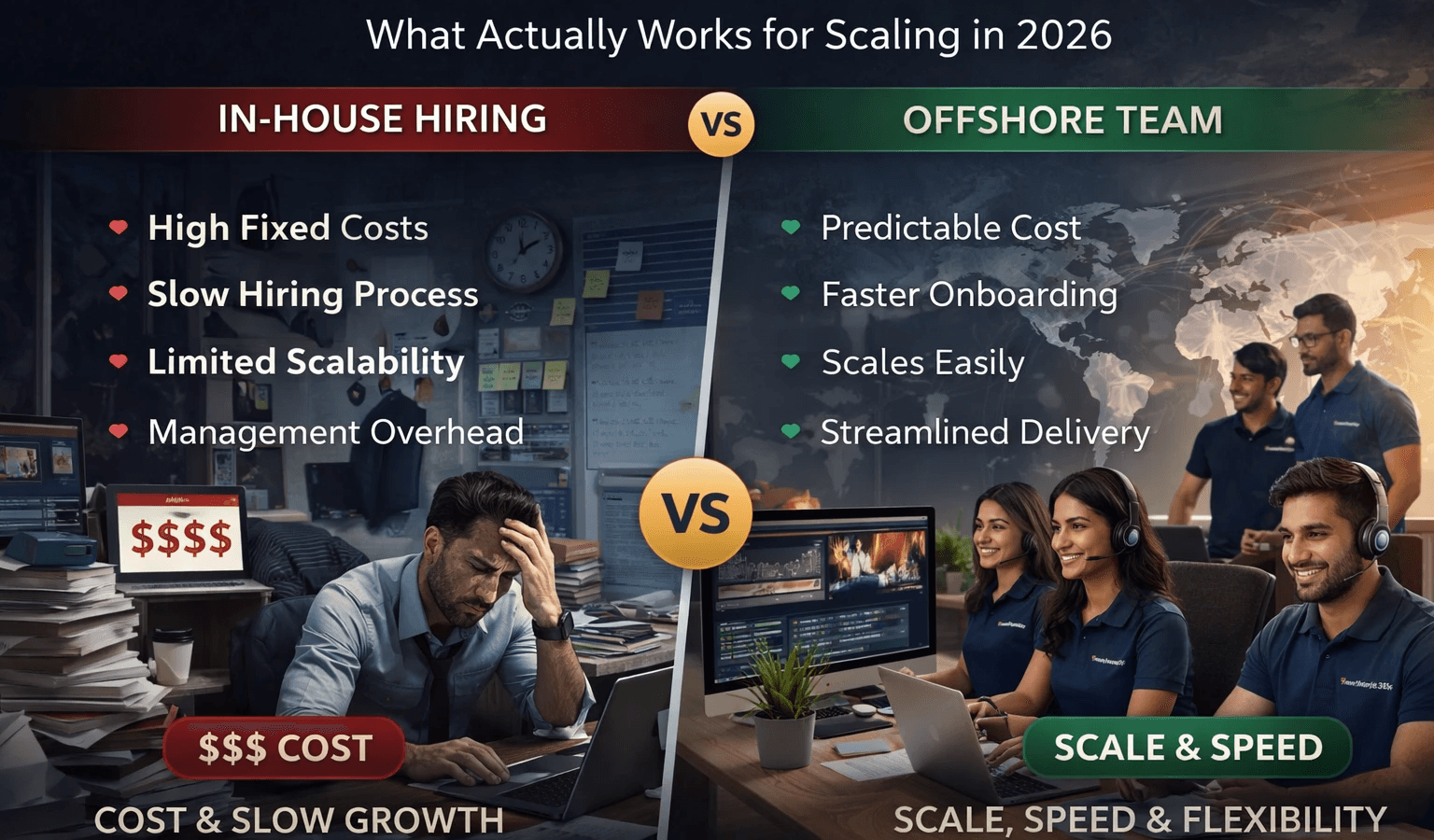
The companies moving fastest right now aren’t hiring more.
They’re building systems that make hiring less necessary.
If you’re exploring ways to scale content without increasing headcount, start by evaluating the system—not the roles.
That’s where the real leverage is.