Back to Journal
How Nike Scales Content Globally: A Step-by-Step Breakdown of Creative Production at Scale
Reading Time
5 Mins
Brands like Nike don’t win because they create better ideas.
They win because they execute faster, more consistently, and at scale.
While most companies struggle to keep up with content demand juggling video production, social media, design, and campaigns Nike operates like a production engine.
This isn’t about budget alone.
It’s about how their system is built.
In this breakdown, we’ll walk through exactly how Nike scales content globally and what growing companies can apply without enterprise resources.
Step 1: Centralized Brand Control
Nike does not decentralize its brand.
Every campaign, visual, and message ties back to a central creative direction.
What this looks like:
Global brand guidelines
Clear creative direction from leadership
Defined tone, style, and messaging frameworks
Why it matters:
Without centralized control, scaling content leads to:
Inconsistent messaging
Fragmented branding
Slower approvals
Nike solves this by making sure:
Strategy is centralized. Execution is scalable.
Step 2: Distributed Creative Execution
Nike doesn’t rely on one internal team to do everything.
Instead, they operate with multiple production units working simultaneously.
What this looks like:
Different teams handling video, design, campaigns, and digital
Regional teams adapting content for local markets
Parallel workflows (not sequential)
The key insight:
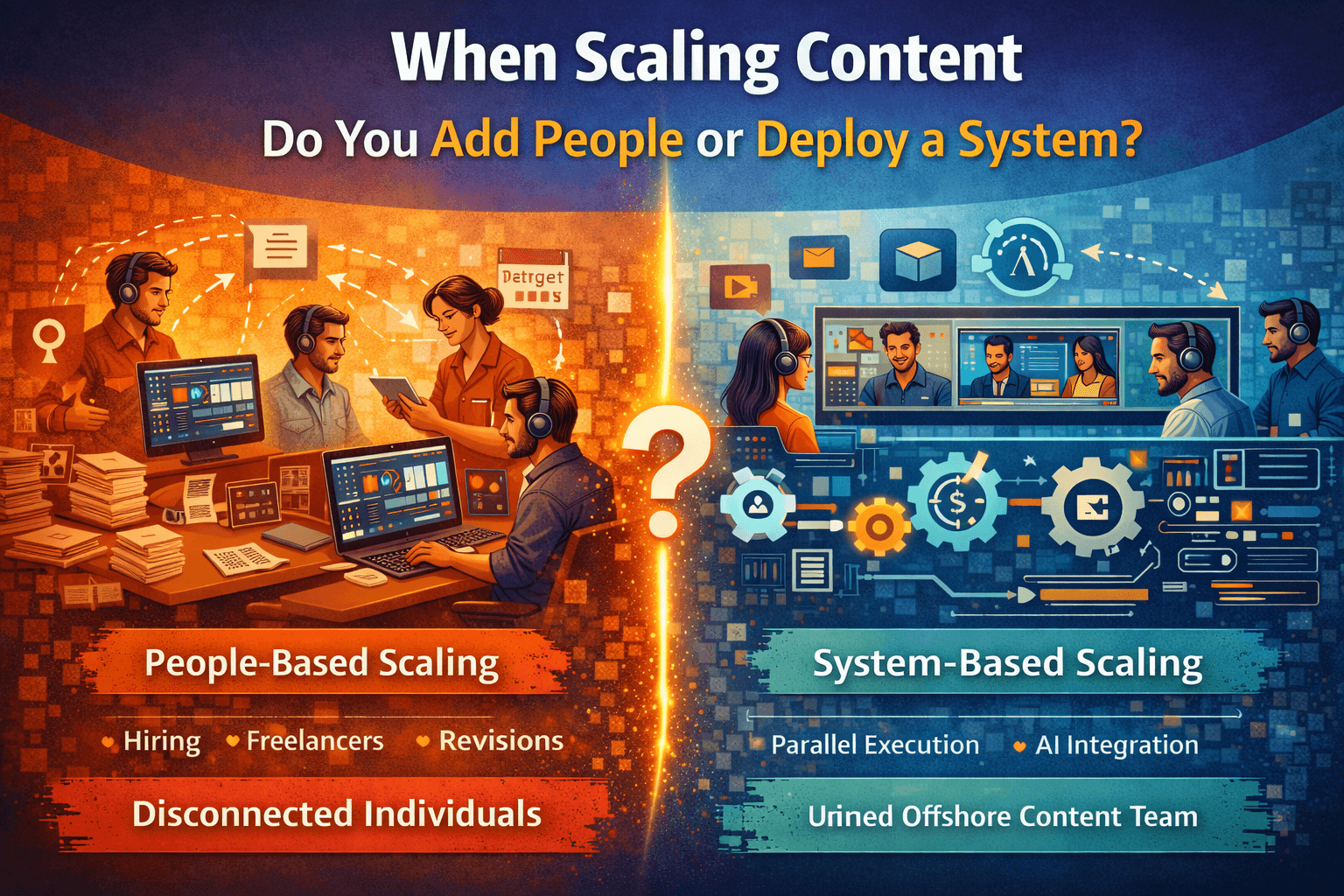
Most companies try to scale content with:
1–2 hires
Or a small internal team
That creates a bottleneck.
Nike avoids this by building capacity, not dependency.
Step 3: Systemized Workflows and Tools
Nike’s output is not chaotic—it’s system-driven.
Behind the scenes:
Structured project workflows
Defined roles and responsibilities
Clear handoff processes between teams
Standardized tools across departments
Why this matters:
Without systems:
Projects stall
Communication breaks
Deadlines slip
With systems:
Work flows continuously
Teams operate independently
Output scales without friction
Step 4: Content Volume Strategy (Speed Wins)
Nike produces a massive volume of content across:
Social media
Campaign launches
Product drops
Athlete collaborations
The advantage:
They don’t rely on one “perfect” piece of content.
They rely on:
Consistent, high-frequency output
Why this works:
More content = more data
More data = better decisions
Better decisions = stronger campaigns
Most companies underproduce.
Nike overproduces—strategically.
Step 5: Built-In Quality Control
Scaling content usually kills quality.
Nike prevents this with process-driven quality control.
How:
Clear creative benchmarks
Feedback loops between teams
Iteration systems
Review layers before publishing
Key principle:
It’s okay to adjust once. It’s not okay to repeat mistakes.
This is how quality improves as volume increases not the other way around.
Step 6: Real-Time Collaboration
Nike’s teams don’t operate in silos.
They collaborate in real time across:
Creative direction
Production
Marketing
What this enables:
Faster decision-making
Fewer revisions
Aligned execution
What most companies get wrong:
They rely on:
Async communication
Delayed feedback
Disconnected freelancers
Result:
Slow production cycles
Frustration
Missed opportunities
Step 7: Scaling Without Hiring Bottlenecks
Here’s the part most companies overlook:
Nike doesn’t scale by hiring one person at a time.
They scale by:
Adding capacity in layers
Expanding production without slowing down
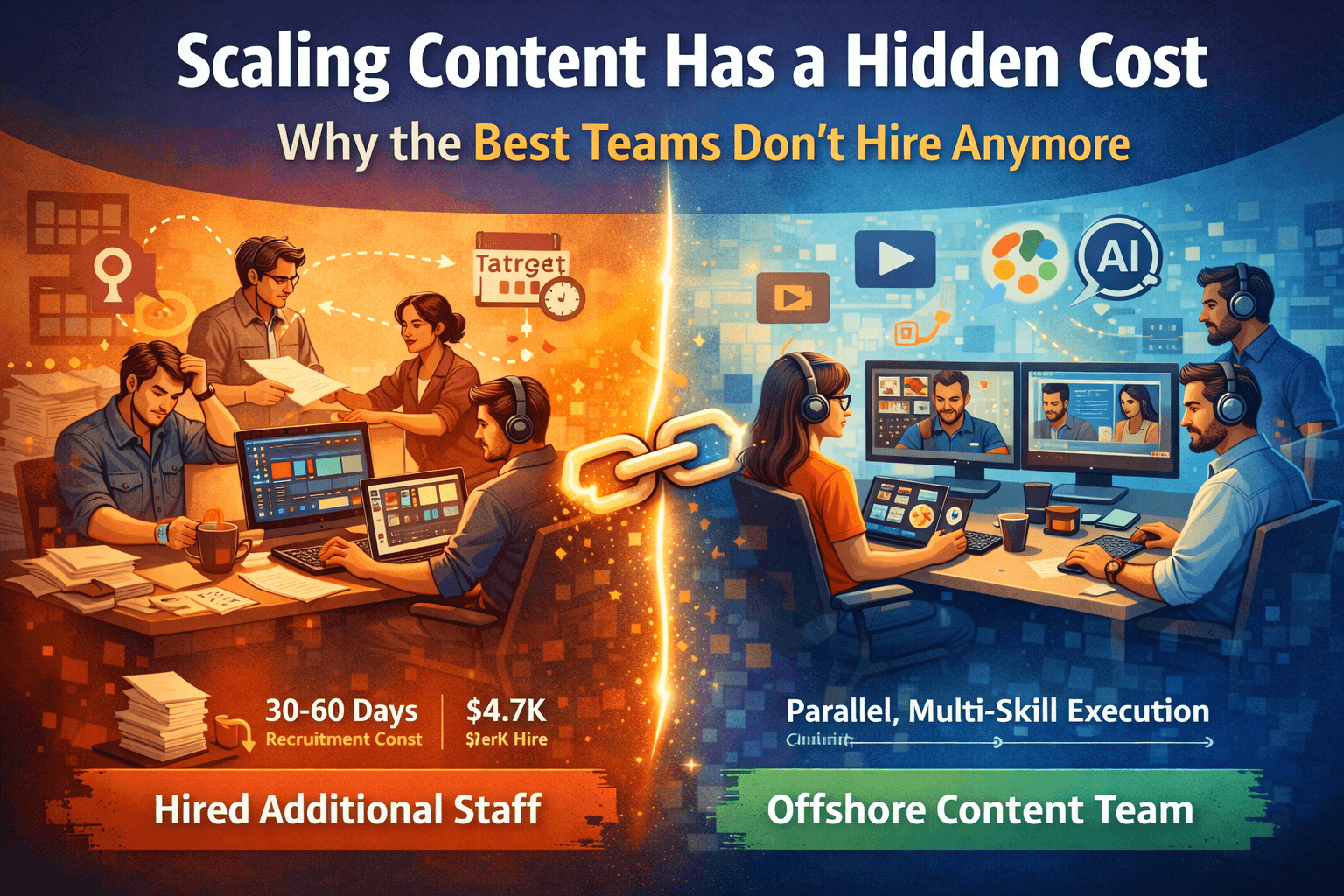
The problem for growing companies:
Hiring looks like the obvious solution.
But in reality:
It’s slow
Expensive
Risky
A mid-level video editor alone can cost $77K– $94K base salary (Glassdoor), or roughly $96K–$132K fully loaded when factoring benefits and overhead (BLS).
And that’s just one person.
What Growing Companies Get Wrong
Most teams are stuck here:
One designer doing everything
One editor overloaded
Marketing waiting on production
Constant backlog
This creates:
Burnout
Delays
Inconsistent quality
You don’t have a talent problem.
You have a capacity problem.
How to Apply This Without Nike’s Budget
You don’t need Nike’s resources.
You need Nike’s model:
1. Separate strategy from execution
Keep direction in-house. Scale production externally.
2. Build capacity, not dependency
Don’t rely on one person. Build a team structure.
3. Create repeatable systems
Standardize workflows, tools, and approvals.
4. Increase output frequency
More content = more growth opportunities.
5. Prioritize real-time collaboration
Speed comes from communication, not just talent.
Where Most Companies Hit a Wall
Even when companies understand this…
They struggle to execute because:
Hiring takes months
Freelancers are inconsistent
Offshore options often fail on communication and quality
So they stay stuck:
Knowing what to do—but unable to scale it.
A Different Way to Scale
This is where the model shifts.
Instead of:
Hiring one person
Or managing multiple freelancers
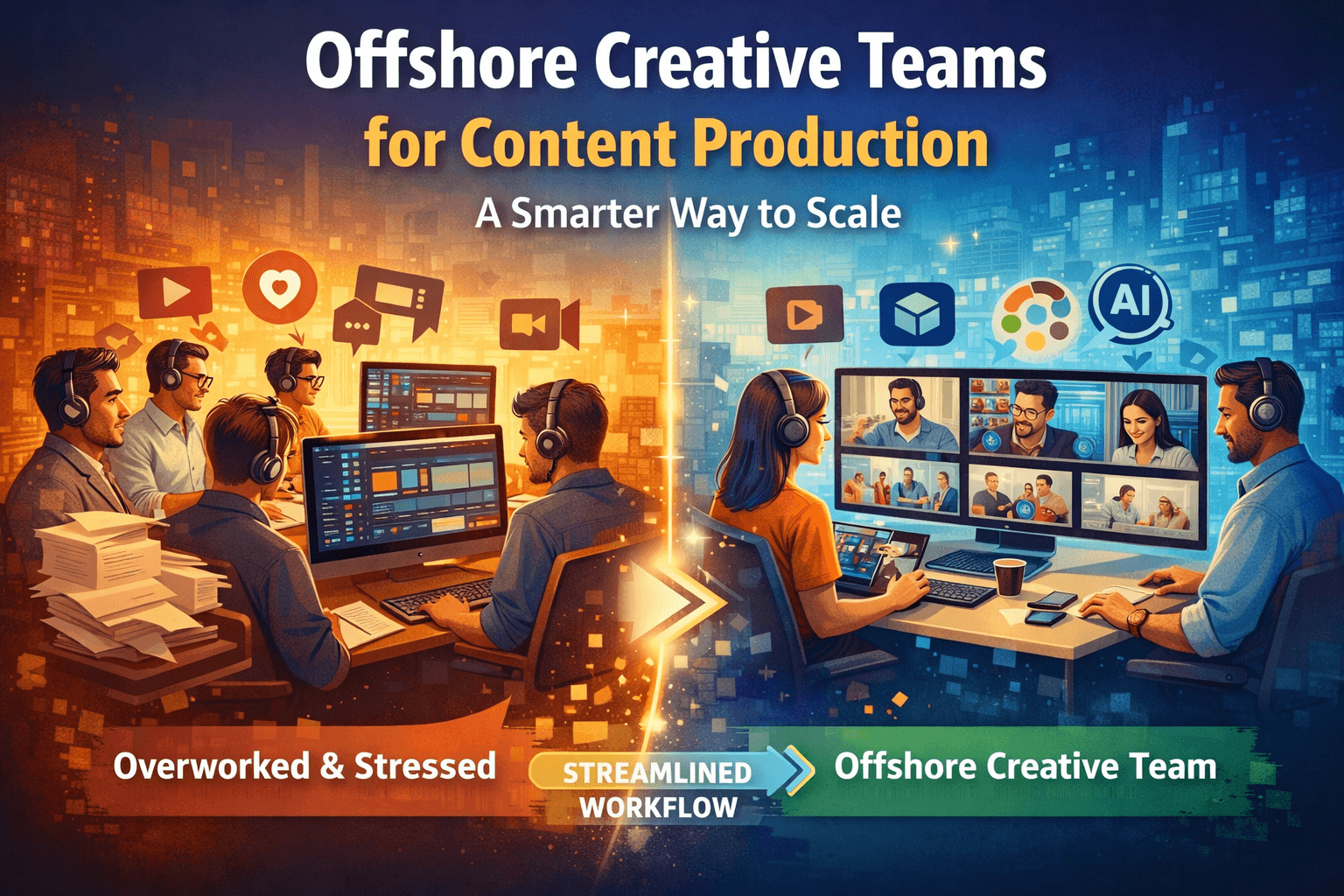
Companies are moving toward:
Dedicated, fully managed creative teams
Teams that:
Work in your timezone
Join your calls
Use your tools
Scale with your needs
The result:
More output
Less overhead
No HR complexity
Nike’s advantage isn’t just creativity.
It’s execution at scale.
And the gap between companies that grow and those that stall is simple:
The ability to turn ideas into content—consistently and quickly.
If your team is stretched thin, missing deadlines, or struggling to keep up…
The problem isn’t ambition.
It’s capacity.
If you’re looking at your current setup and thinking
“this isn’t scalable”—
That’s usually the right signal to explore a different model.
check how TeamBoost365 can help to achieve it.