



Back to Journal
How to Scale Content Production Without Hiring More Staff (2026 Guide)
Reading Time
4 Mins
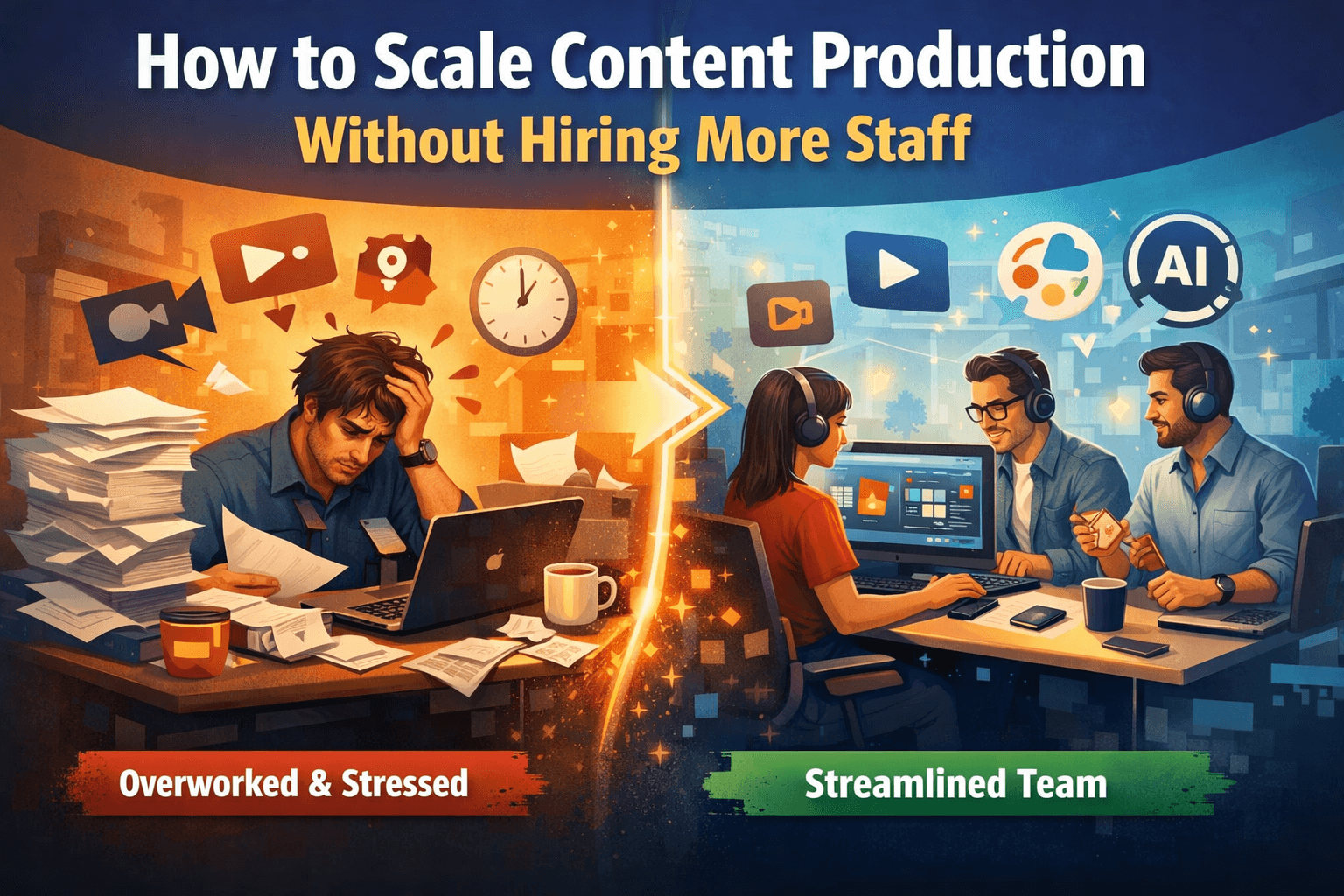
At some point, every growing company hits the same ceiling.
Content demand increases:
More videos
More social media
More marketing assets
But your team doesn’t scale at the same pace.
So what happens?
Deadlines slip
Quality drops
Your team gets stretched thin
And the default response is almost always:
“We need to hire.”
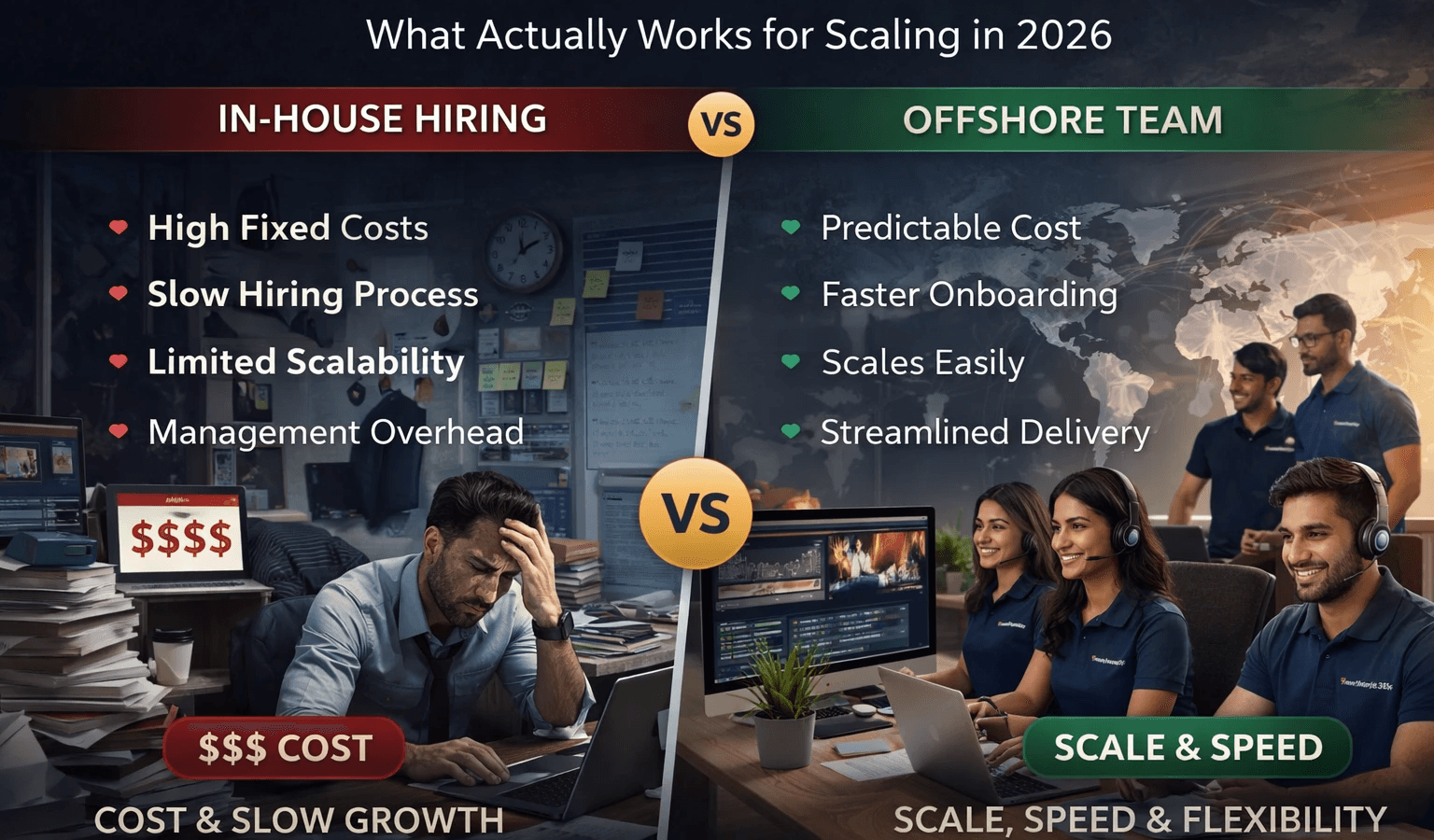
Why Hiring More Staff Doesn’t Actually Solve the Problem
Hiring feels like the logical next step. But it introduces new constraints:
A mid-level creative hire costs $96K–$132K fully loaded (BLS + Glassdoor estimates)
Recruitment costs average $4,700 per hire (SHRM)
Onboarding delays productivity for months
And after all that, you’ve added:
One skillset
One workload limit
One dependency
That’s not scalable. That’s incremental.
The Real Issue: Capacity, Not Talent
Most companies misdiagnose the problem.
It’s not that your team isn’t good enough.
It’s that:
They’re overloaded
They’re context-switching
They don’t have enough execution bandwidth
You don’t need more pressure. You need more capacity.
How to Scale Content Production Without Hiring More Staff
Here’s what high-growth companies are doing instead:
1. Move From Individuals to Systems
Instead of relying on single hires, shift to team-based execution.
A system includes:
Multiple skill sets working together
Defined workflows
Repeatable processes
This eliminates bottlenecks caused by individual dependency.
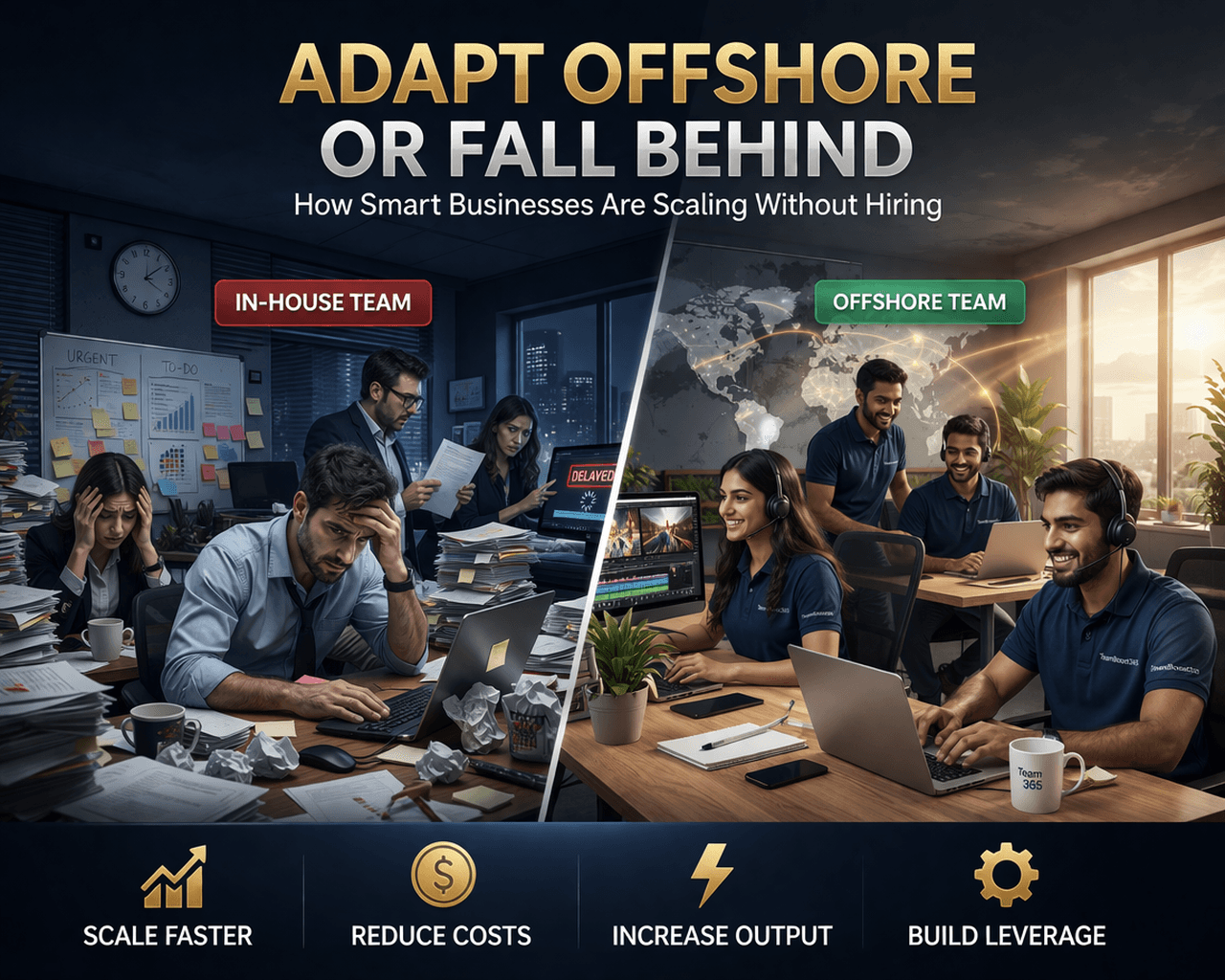
2. Use Offshore Creative Teams (That Feel In-House)
Modern offshore models have evolved.
The best setups now:
Work in your timezone
Join your internal calls
Use your tools and workflows
Communicate in real-time
This removes the biggest historical risks:
Communication gaps
Time delays
Misalignment
Instead of “outsourcing,” it becomes team extension.
3. Leverage AI Without Replacing Human Judgment
AI is a multiplier but not a replacement.
Smart teams use AI for:
First drafts
Editing acceleration
Workflow automation
But keep humans responsible for:
Creative direction
Quality control
Brand consistency
This hybrid approach increases output without sacrificing standards.
4. Eliminate Rework Through Better Processes
One of the biggest hidden drains on content production is rework.
Fix this by:
Creating clear templates
Using reference examples
Standardizing feedback loops
High-performing teams follow a simple rule:
Mistakes can happen. Repeated mistakes cannot.
5. Scale Flexibly, Not Permanently
Hiring is rigid.
Scaling production should not be.
The better approach:
Increase capacity when needed
Scale down when demand drops
Avoid long-term overhead commitments
This keeps your operation efficient as you grow.
What This Looks Like in Practice
Companies adopting this model are able to:
Increase content output without increasing headcount
Maintain consistent quality across projects
Reduce internal workload and burnout
Move faster than competitors still relying on hiring cycles
A Smarter Way to Scale
Platforms like TeamBoost365 are built around this exact model.
Instead of adding one hire at a time, they provide fully managed creative teams that integrate directly into your workflow—combining human expertise with AI-enhanced production.
The result:
More output
Less operational friction
No HR overhead
If you’re trying to scale content production without hiring more staff, the solution isn’t working harder—or even hiring faster.
It’s changing the model entirely.
The companies pulling ahead right now aren’t adding more people one by one.
They’re building systems that scale.
If you’re evaluating ways to scale content production without increasing headcount, understanding how integrated team models work is a strong place to start.